IBD in Dogs - A broad term label for symptoms
Over the years, I’ve watched one label pop up more and more: IBD.
And every time, dog guardians are doing exactly what they should be doing — heading straight to their vets, asking the right questions, and trying to get to the bottom of things.
The trouble is, IBD is often treated like the cause rather than what it actually is: a label for a cluster of symptoms. It explains nothing. It just says, “Something’s wrong in the gut.” Helpful… but not really.
Proteins: the convenient scapegoat
Somehow proteins always end up being blamed. Chicken? Bad. Beef? Evil. Duck? Devil incarnate.
But in my experience, protein is very rarely the villain.
Which is why switching from protein to protein isn’t working for so many dogs — and why people end up confused, stressed, and staring helplessly at yet another bag of expensive “sensitive stomach” food.
Let’s talk about those for a moment…
The lure of prescription kibbles
When you’re desperate, that shiny bag of hydrolysed / hypoallergenic / novel protein kibble looks like salvation.
But here’s the kicker:
If protein intolerance isn’t the problem, those diets aren’t going to fix anything.
And for most dogs with chronic gut issues, protein isn’t the problem.
So we end up with “premium” stomach-friendly kibbles that don’t actually solve the underlying cause — and dogs still having flare-ups, loose stools, and stressed guts.
Medication that helps… but also sometimes complicates things
Commonly, corticosteroids like prednisolone get prescribed under names such as Deltacortril, Deltastab, Dilacort and Pevanti.
They can help with inflammation in the short term — absolutely — but long term, they can also make leaky gut worse by adding even more inflammation to an already compromised digestive system.
Why the symptoms keep coming back
Something is causing an imbalance in your dog’s microbiome.
If we only chase the symptoms, you’ll be stuck on a loop — elimination diets, new foods, new supplements, more scratching your head, more frustration.
I see so many dogs go through this cycle for months. Meanwhile:
their gut is stressed
they are stressed
you are stressed
and dogs are emotional sponges — stress can absolutely worsen stools
If your dog’s “IBD” also comes with chronic itching, waxy ears, fur loss or similar issues, then we’re usually looking at the bigger picture:
Leaky Gut (intestinal hyperpermeability).
Leaky gut, explained the fun way
Picture your dog’s intestines as a sieve.
The lining should be tight, selective, and sensible.
But when it’s compromised, larger particles — like unprocessed proteins — slip through cracks they shouldn’t.
Suddenly these proteins are in the bloodstream or lymphatic system and your dog’s immune system goes:
“Whoa, mate… how did you get in here?”
Like when you wander into the wrong room in a nightclub and security appear out of nowhere.
Cue the T cells, charging in like bouncers.
Inflammation rises.
Loose stools happen as the body tries to “evacuate the intruder.”
This is why changing proteins doesn’t work.
To the immune system, you’re just sending in more intruders wearing different outfits.
So where do you go from here?
Use this information to have deeper conversations with your vet.
Don’t settle for a label as an answer — look for the cause.
And if you’re ready to actually resolve leaky gut through nutrition and functional changes, reach out.
I have my own protocols that I use with clients, and we can work through this together.
Final note
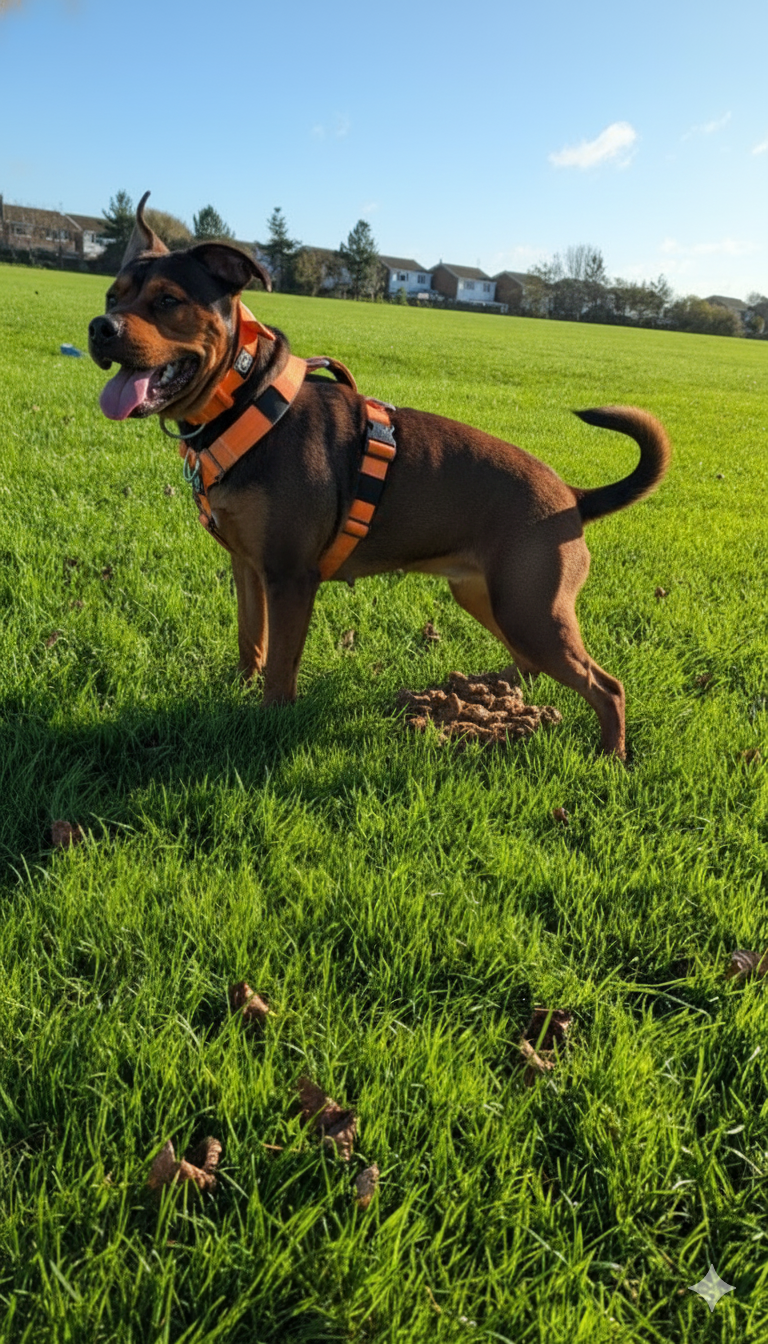
Please excuse the questionable AI image produced by Gemini — apparently it struggles with “dog having a poo.” I didn’t have any real photos of her doing one (you’re welcome).