The Backbone of a Raw-Fed Dog (Pun Absolutely Intended)
Raw Meaty Bones are life for dogs regardless of the model you follow PMR, BARF or FrankenPrey— but is a bone really just a bone?
You’d like to think so, wouldn’t you?
Unfortunately… it’s not that simple.
Not All Bones Are Created Equal
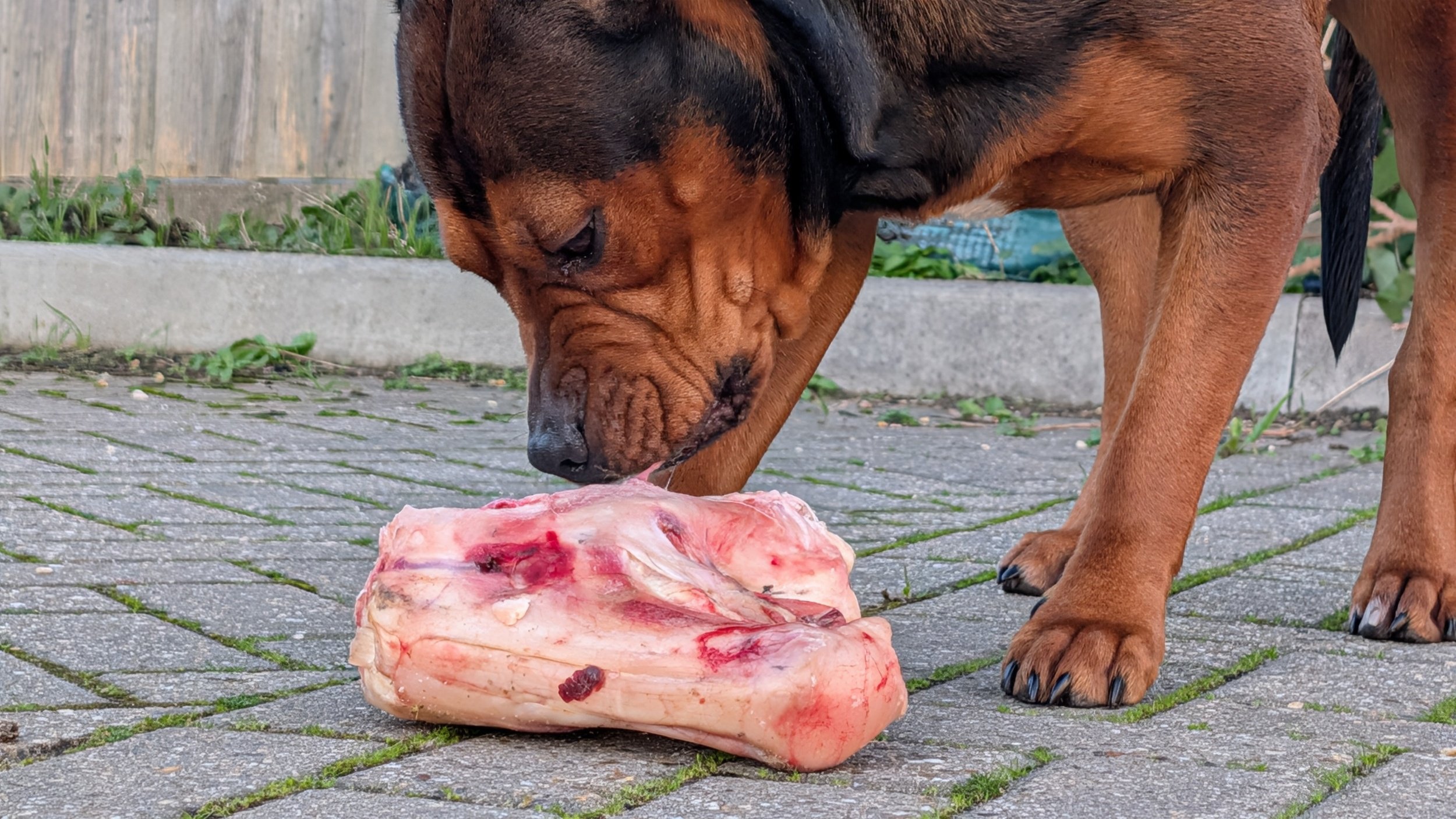
As a general rule, weight-bearing bones and joints are recreational only.
Why? Because these bones are tough, built to hold up large animals, and they can absolutely damage your dog’s teeth.
I often reference wolves because, anatomically, they’re no different from our dogs when it comes to digestion and nutrient requirements. But a wolf has a far stronger bite force and harder teeth, so the risk of dental injury is far lower.
Our domestic dogs? They’ll give those bones a good attempt — but we’re the ones paying the vet bills. So we adapt.
Common Recreational Bones
These are great for gnawing and enrichment, not eating:
Knuckle bones
Marrow bones
Necks from large prey (cow, horse, deer)
They’re also brilliant for making bone broth.
So What Bones Can They Eat?
Dogs can safely consume the entire carcass of smaller prey, including:
Rabbit / Hare
Squirrel
Partridge
Pheasant
Rodents (mice, rats, etc.)
Chicken
Duck
Quail
Turkey
When it comes to butchered Raw Meaty Bones, they can eat:
Wings
Necks
Feet
Legs (including lamb and similar prey)
Thighs
Backs
Frames
Ribs (lamb/pig/goat; beef ribs can be too tough for some dogs)
Tails
These are just examples — the full list is much bigger.
Raw Matters
All bones should be fed raw if you’re aiming to support cellular health.
Blood, myoglobin, moisture, and natural enzymes are crucial for whole-body wellbeing.
Dehydrated versions make great snacks, but most are processed at high temperatures, stripping away moisture and diminishing enzymes and beneficial bacteria. Even rehydration won’t restore what’s been lost.
If you do use dehydrated bones(not weight bearing), look for those processed at minimal temperatures (below 40°C). They’re a better option — but still nowhere near the bioavailability /nutrient density of fresh, raw bones.
Raw is always best.
A Personal Note (And Not Everyone Agrees)
I don’t class poultry feet or necks as true Raw Meaty Bones.
Even raw, the actual bone content is low. They shine more in the world of joint support thanks to their collagen, glucosamine, and chondroitin.
So for me? They’re essential snacks, not RMBs in terms of a meal.
I hope this quick educational breakdown gives you more clarity — and confidence — in choosing the right bones to feed, and the ones to keep strictly for recreational chewing.
Empowerment starts with understanding what goes in your dog, and why.